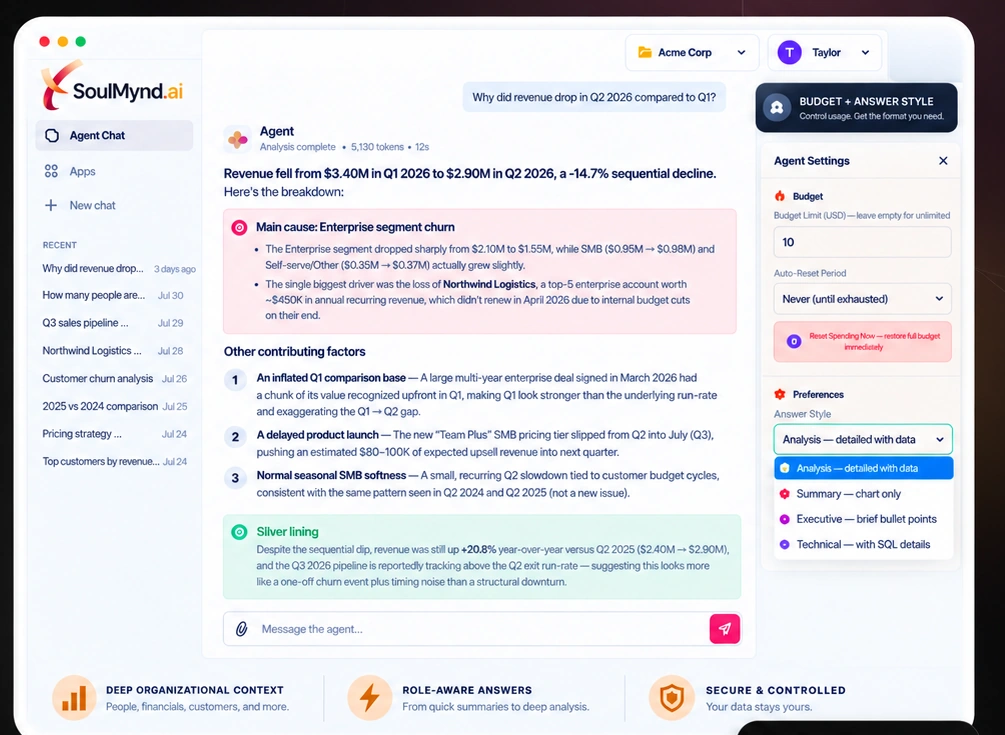
01 / Budget controls
Manage usage and spend.
Set limits, reset rules and visible usage guardrails directly inside the platform.

The platform brings organizational data, business context and specialist workflows into one connected experience. People ask in the language of the business, receive the depth that fits their role, and continue from answer into analysis or action.
Across the platform, teams can manage usage, improve answer reliability, protect sensitive information, control access and shape outputs for different roles. The same foundation supports specialist products and custom applications built for the organization.
Set limits, reset rules and visible usage guardrails directly inside the platform.
Reduce repeated token usage by drawing on cached results and shared context where appropriate.
Return analyst detail, executive summaries, chart-led output or technical depth from the same platform.
Evaluation and validation layers help check relevance, consistency and response quality before use.
Apply controls around sensitive fields, governed data and the way information moves across applications.
Permissions define what each user can see, access and do across the platform and its applications.
Watch a full walkthrough - asking a question, seeing the analysis take shape, the access controls behind it, and the applications built on top of the same platform.
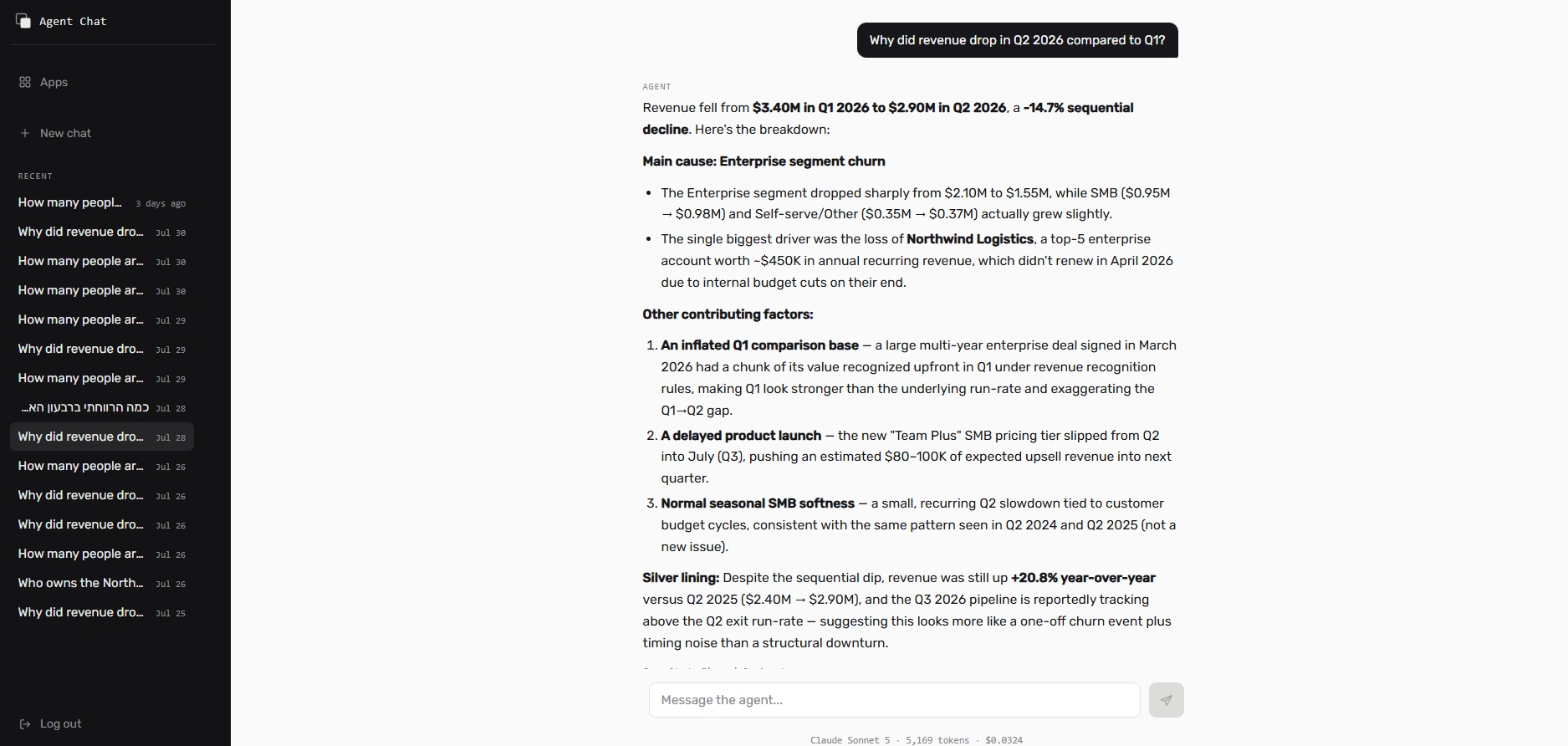
Agent Chat is the front door to the platform. The user asks in plain language, and the platform brings the right agent, data and context into the conversation.
The conversation can continue into deeper analysis, another agent or the workflow needed to move the question forward.
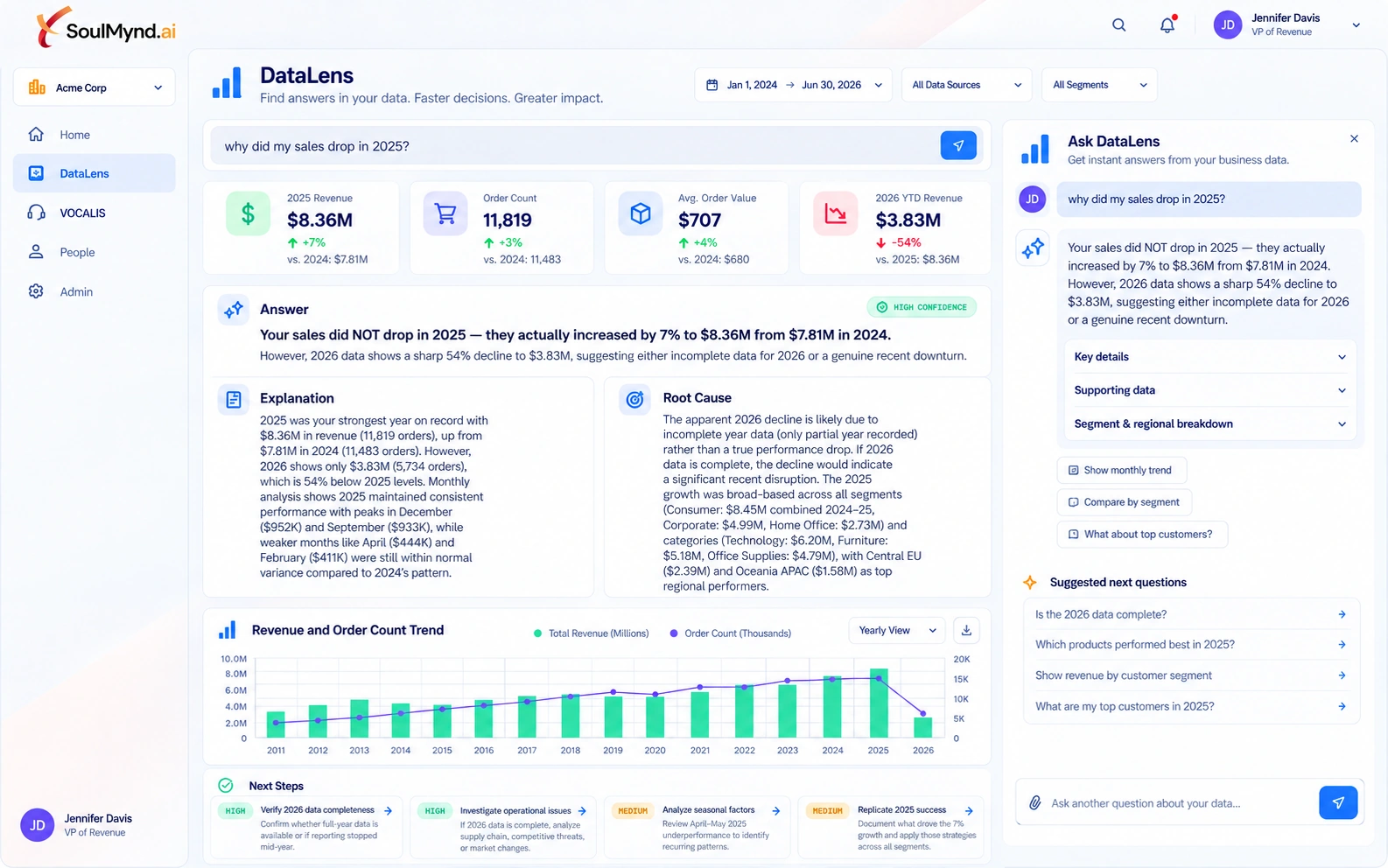
DataLens gives business users natural-language access to organizational data and returns a structured analysis they can work with.
The answer can bring together the finding, explanation, evidence, visualization and recommended next actions in one continuous flow.
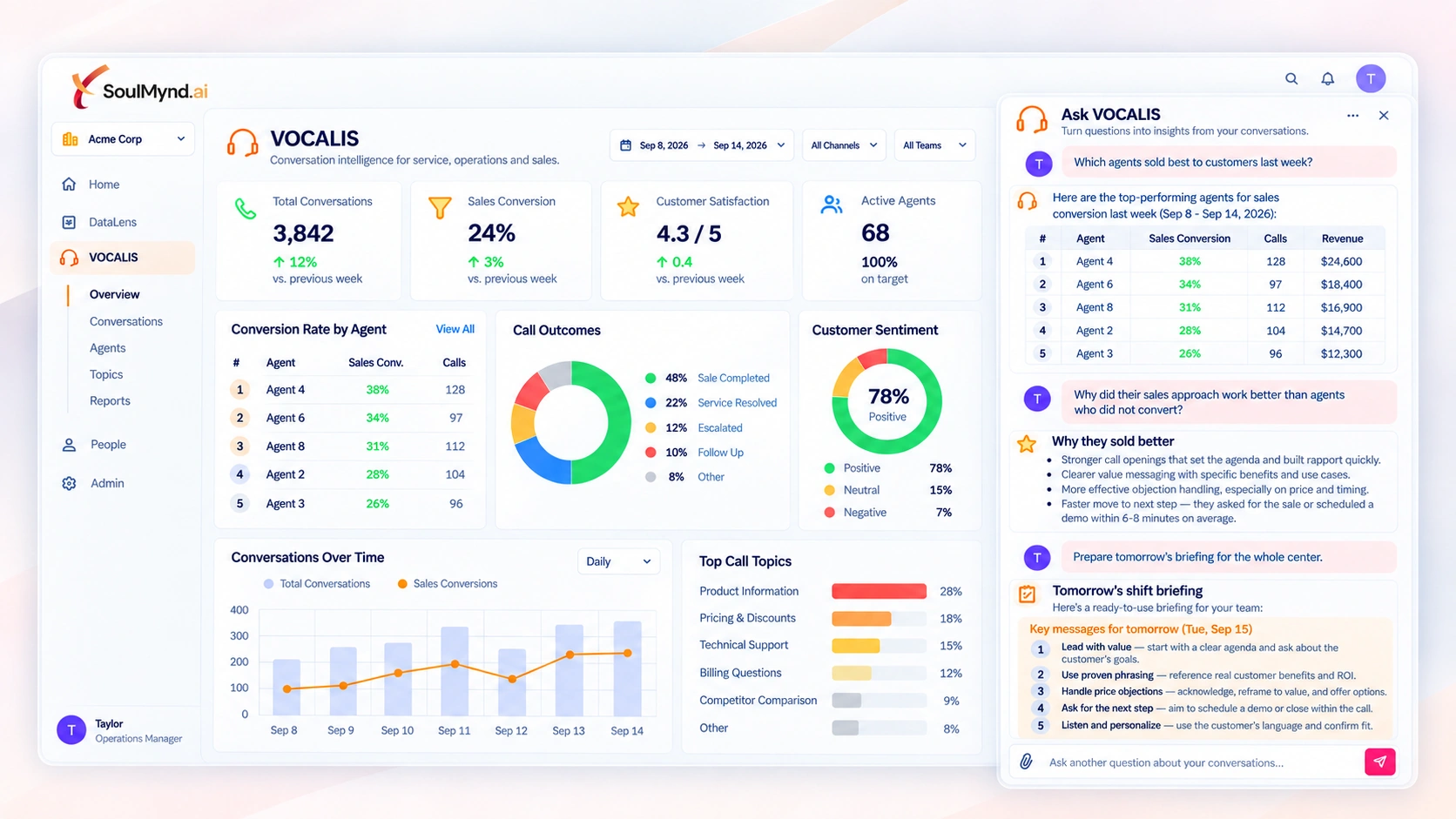
Vocalis analyzes conversations across service, operations and sales, then lets managers ask questions across that conversation data to understand what is working, where performance breaks down and what the team should do next.
A manager can identify who converted best, understand the behaviors that drove those results, compare them with calls that did not convert, and turn the findings into a practical briefing for the next shift.
The same approach can be used for service quality, escalations, operational conversations and other interaction-heavy processes.
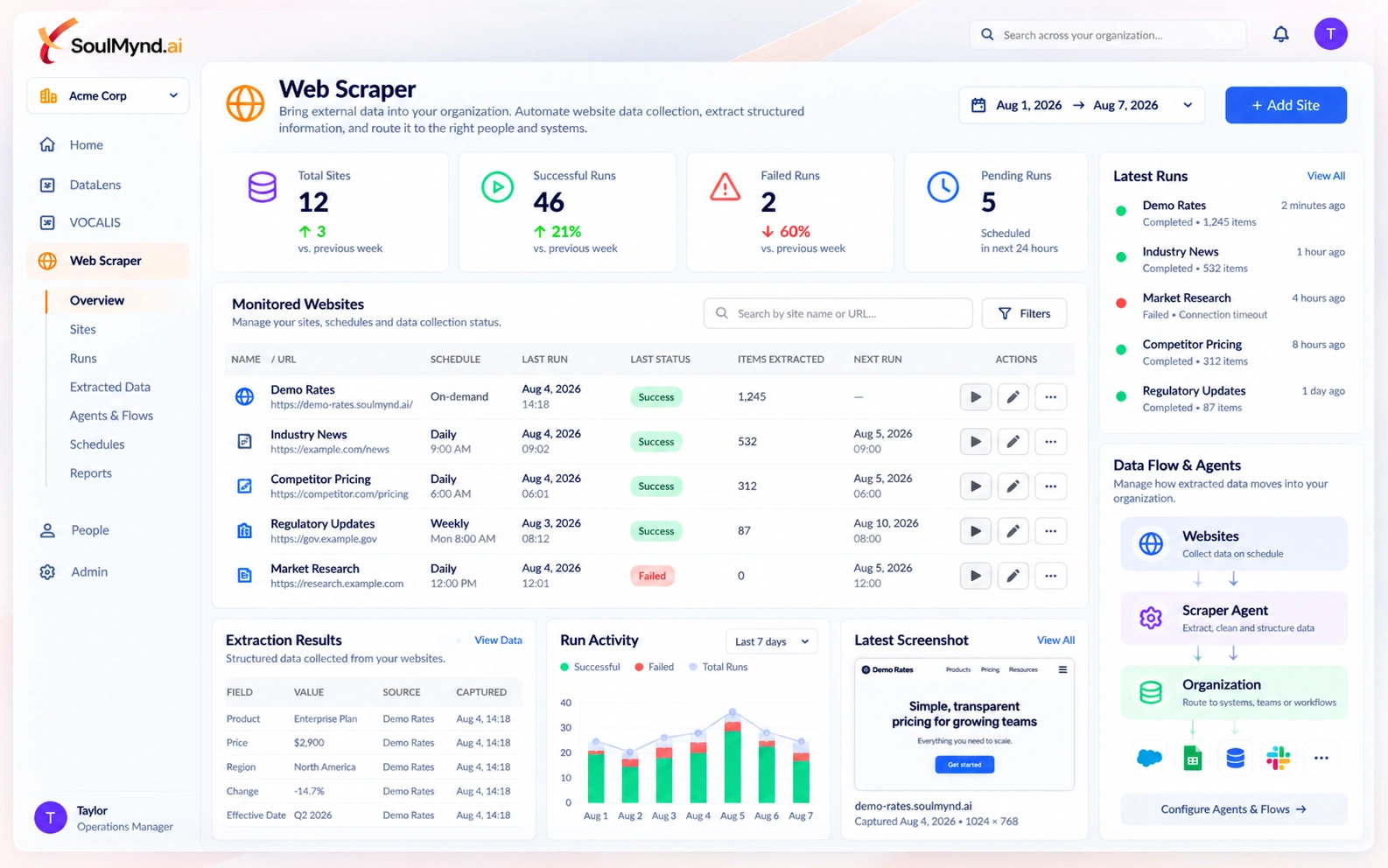
Web Scraper helps teams collect the outside data they actually need: scheduled pulls from websites, extracted values, screenshots and automated deliveries into the organization.
Behind the operational surface, the workflow can include automation and agents that know how to parse the source, organize the result and deliver it to the right internal destination for each organization.
The platform supports a wide range of apps built on top of the same foundation. Teams can use specialist applications, knowledge experiences, internal portals, operational workspaces and custom workflows tailored to the organization.
Expandable application layerBring us the business question, the data you need to understand, or the workflow you want to improve. We can start there.
Bring us a challenge →